
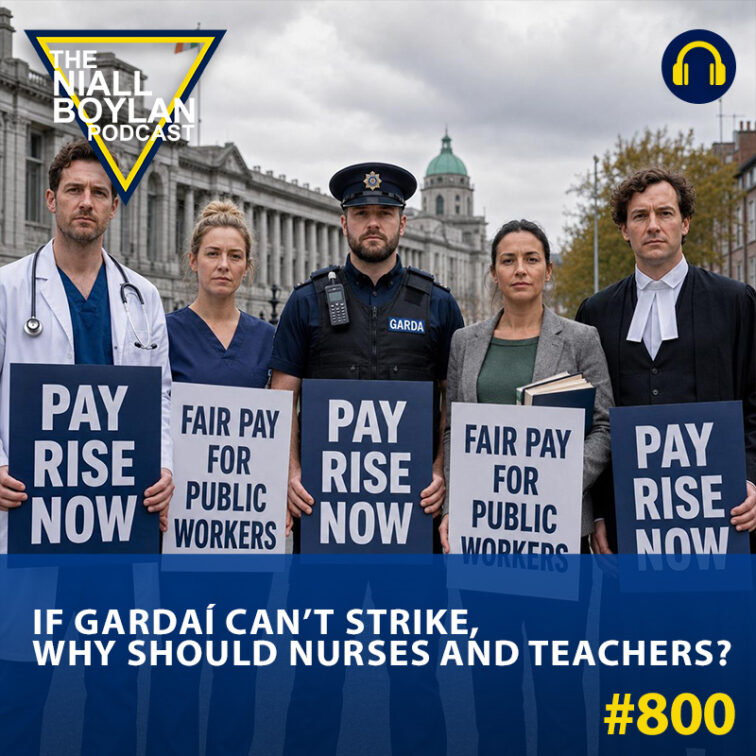
If Gardaí Can’t Strike, Why Should Nurses And Teachers?
-
play_circle_filled
If Gardaí Can’t Strike, Why Should Nurses And Teachers?
Niall Boylan
Public sector workers are warning that patience is running out over pay, and the threat of industrial action is becoming increasingly serious.
Niall Boylan talks to callers about whether Ireland could be heading towards a major wave of strikes across essential public services, and whether workers in areas such as healthcare, education, public transport and social protection should have the same right to withdraw their labour as anyone else.
The previous public service pay agreement expired on 30 June 2026 after delivering increases of up to 10.25% over two and a half years. Unions argue that rising prices have continued to erode living standards and that any new agreement must properly reflect inflation. Fórsa has been balloting more than 90,000 public sector members on industrial action, while SIPTU, the INMO and other unions are also moving towards ballots. Prison officers have already backed industrial action, and Unite has warned that Ireland could face a “winter of strikes” unless the Government makes what it considers a meaningful pay offer.
Teachers are also becoming increasingly involved. The Teachers’ Union of Ireland has announced a ballot for industrial action in a separate dispute over a 1% salary increase which it says has not been paid as agreed, potentially affecting cooperation with elements of Senior Cycle assessment reform.
But where should the line be drawn? If nurses, teachers, transport workers or other essential public servants strike, it is ordinary members of the public who can ultimately suffer. Gardaí are prohibited from striking because of the essential nature of their work, so should similar restrictions apply to other vital services?
And then there is the question of pay. Do public servants deserve another substantial increase because of the cost of living, or after receiving increases of up to 10.25% under the previous agreement, is it unreasonable to expect private sector taxpayers to fund another large rise?
Niall hears from callers on both sides of a debate that could become one of the biggest industrial relations battles facing the Government this winter.