M9 Tragedy: Blame the Gardaí, Blame the Parents, Blame TikTok, But Never Government. (Uncensored)
-
play_circle_filled
M9 Tragedy: Blame the Gardaí, Blame the Parents, Blame TikTok, But Never Government. (Uncensored)
Niall Boylan
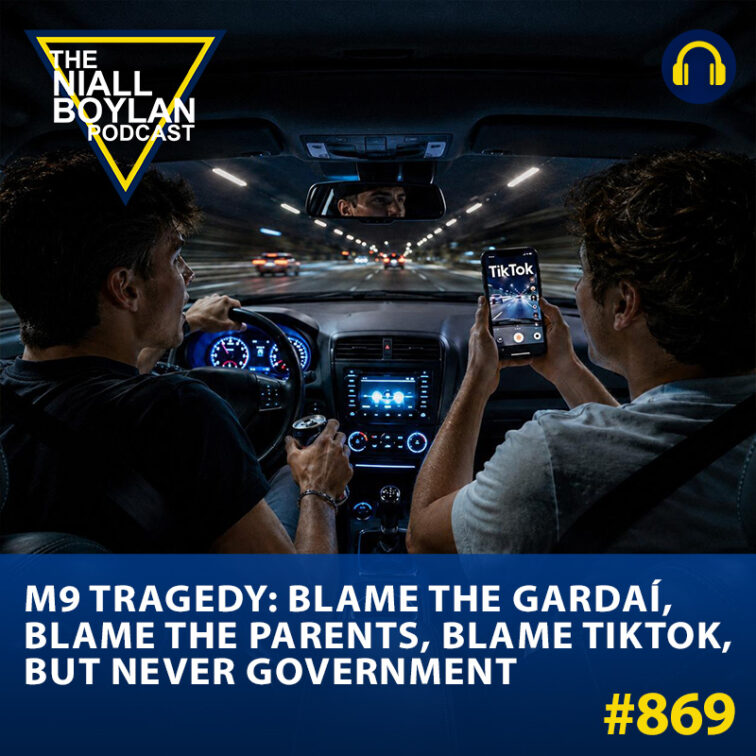
In this episode, Niall talks to financial commentator Karl Deeter about whether TikTok and social media are fuelling a new and deadly wave of joyriding, or whether politicians are looking for a convenient scapegoat following the horrific M9 tragedy.
Five teenage males were killed in the early hours of Sunday, 16 August, after the car they were travelling in was driven the wrong way along the M9 near Moone in Co Kildare and collided head on with another vehicle. Three women and a child travelling in the second car were seriously injured. Garda Commissioner Justin Kelly subsequently warned of a disturbing trend in which dangerous driving is being carried out for social media attention and “likes”.
Attention has now turned to TikTok, which has been invited to appear before the Oireachtas Committee on Arts, Media, Communications, Culture and Sport. Committee chair Alan Kelly said serious questions have arisen about social media content that appears to glorify dangerous and illegal behaviour on Irish roads. Ireland’s media regulator, Coimisiún na Meán, has also contacted TikTok seeking information about how it deals with dangerous driving content.
But is social media really the cause? Ireland experienced serious waves of joyriding throughout the 1980s and 1990s, decades before TikTok, Snapchat or Instagram existed. Recent reporting also suggests Gardaí are dealing with repeat teenage offenders, car thefts and dangerous driving incidents on an almost nightly basis, raising questions about policing, Garda resources, youth diversion programmes and whether offenders face sufficient consequences.
Niall asks Karl Deeter whether TikTok is genuinely encouraging young people to take greater risks for online notoriety, whether social media companies should be held responsible for amplifying criminal behaviour, or whether calling TikTok before an Oireachtas committee allows the Government to avoid much harder questions about policing, the justice system and how repeat young offenders are dealt with.
Is TikTok part of the problem, or is it simply the latest convenient scapegoat?