
GDPR Used to Shield the System, Not Serve the Public Interest: Transparency, Accountability, and the Public’s Right to Know by NUALA NOLAN
Dear Editor,
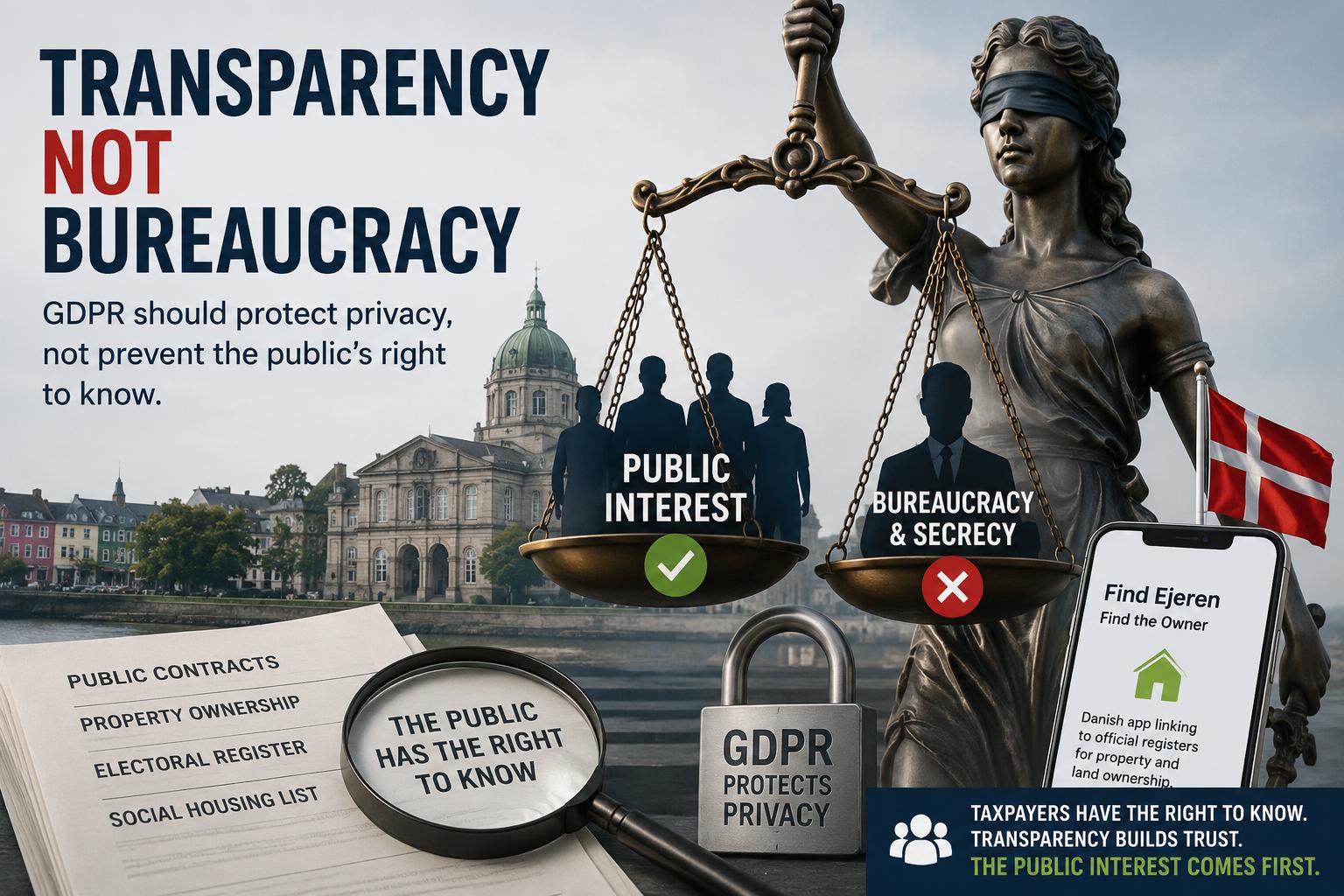
When Ireland transposed this Directive into Irish law, it tipped the scales in such a way that it protects civil servants, hinders the public interest, and places a blindfold over the Freedom of Information laws that were already in place. It ignored Section 6(e), which relates to the public interest and the public’s right to know.
This means that the public has to pay expensive fees to solicitors for information that should already be accessible in the public domain. This is not the case in other EU countries such as Denmark, where there is even Find Ejeren (“Find the Owner”), a dedicated app that links directly to official Danish registers to retrieve information on property and land ownership, an app that tells you who owns a particular property.
The purpose of EU data protection law is to protect citizens’ private information from misuse by malicious actors. This is understandable in a time of increasing scams, identity fraud, and the mainstream media’s pursuit of sensational headlines, not to mention social media trolls. GDPR was never intended to prevent the public from accessing information that would previously have been available in the public domain, such as the right to inspect the Electoral Register and access to a transparent social housing list.
Taxpayers should have the right to know the contact details of owners of properties that are the cause of anti-social behaviour. They should also have access to details of contracts involving public money without having to spend money on solicitors. The people of Galway should have known how the initial contract was agreed in the decision to move Galway City Council offices from Galway City Hall in the city centre to the Crowne Plaza in Mervue, a move that will inconvenience many service users.
Our representatives, the city councillors, should have been consulted before any discussions were held with the developers.
All initial meetings between senior civil servants, developers, and contractors involving large sums of public money should be recorded and open to public scrutiny once contracts are finalised. GDPR should not override the public interest and was never intended to be employed in this way.
Yours sincerely,
Nuala Nolan

Latest news