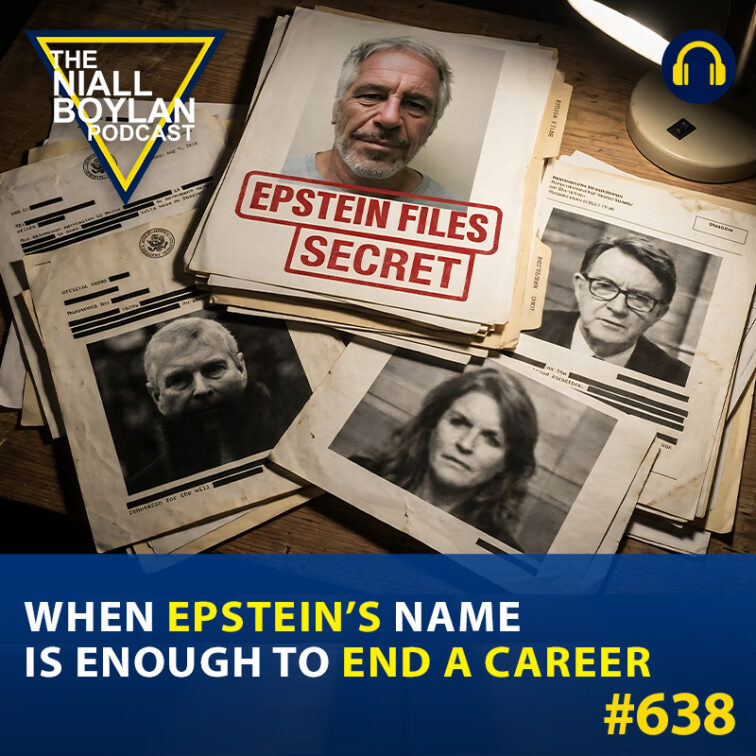
When Epstein’s Name Is Enough to End a Career. Episode 638
-
play_circle_filled
When Epstein’s Name Is Enough to End a Career. Episode 638
Niall Boylan
In this episode, host Niall is joined by journalist and columnist Ian O’Doherty to tackle one of the most uncomfortable questions resurfacing in public life: are we now too quick to assume guilt by association?
As more names emerge from the so-called Epstein files, headlines are once again filled with celebrities, politicians, royalty, and cultural figures who moved in the same social circles as the convicted sex offender Jeffrey Epstein. The renewed focus has placed Prince Andrew back at the centre of public outrage, alongside fresh scrutiny of his ex-wife Sarah Ferguson, with reports of charities linked to her shutting down amid mounting pressure.
But amid the noise, a warning has been issued by some newspapers and commentators: that media outlets are increasingly publishing long lists of names based purely on association — not accusation, not evidence, not charges. Phrases like “Unsealed names,” “A-listers named,” and “Biggest celebrities exposed” can subtly — or not so subtly — imply guilt by mere mention.
Niall and Ian dig into where journalism, justice, and public anger collide.
A brief timeline of Epstein and the latest revelations:
2008: Jeffrey Epstein is convicted of soliciting a minor and serves a controversial, lenient jail sentence.
2019: Epstein is arrested again on federal sex-trafficking charges.
August 2019: Epstein dies in a New York jail cell while awaiting trial, officially ruled a suicide.
2024–2025: Court documents linked to civil cases are unsealed, revealing names of individuals who had contact with Epstein — many without any allegation of wrongdoing.
Now: Public debate reignites as social and reputational consequences hit people named, regardless of evidence.
So where do we draw the line?
If someone socialised with Epstein, attended his parties, or accepted his hospitality — especially before his conviction — does that make them morally or socially culpable?
Or is it dangerous, unfair, and legally reckless to blur association with guilt?