Three Days To Save A Life? The Abortion Vote Dividing Ireland
-
play_circle_filled
Three Days To Save A Life? The Abortion Vote Dividing Ireland
Niall Boylan
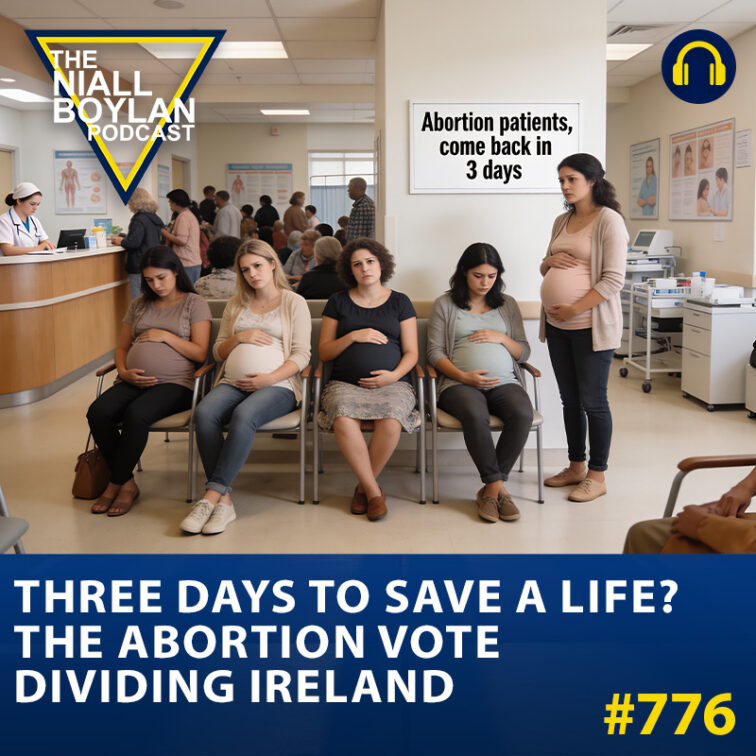
On today’s podcast, Niall speaks to Niamh Uí Bhriain, Assistant Editor of Gript Media, and Clare Mills, pro-choice advocate, about one of the most contentious issues currently before the Dáil. Government leaders, including Taoiseach Micheál Martin and Tánaiste Simon Harris, have indicated they will support a Sinn Féin bill to abolish the mandatory three-day waiting period for women seeking an abortion in early pregnancy. A free vote is being held in the Dáil today, with the legislation expected to pass to the next stage. The current law requires a woman seeking an abortion within the first 12 weeks of pregnancy to wait three days between her initial consultation and the procedure. Sinn Féin argues the delay is unnecessary, while supporters of the existing law say it was one of the safeguards presented to voters during the 2018 referendum.
During the debate, Taoiseach Micheál Martin said he intends to support the legislation progressing, acknowledging that there are arguments on both sides of the issue. Simon Harris has also confirmed he will vote in favour, saying his position reflects engagement with women and medical professionals.
Supporters of the change argue that the waiting period is “patronising and paternalistic” and places additional stress on women who have already made a difficult decision. Sinn Féin’s David Cullinane has described the proposed legislation as a straightforward measure designed to remove a barrier to healthcare.
Opponents argue that the three-day pause serves an important purpose by giving women time to reflect on a life-changing decision. Pro-life organisations and campaigners maintain that some women have changed their minds during the waiting period and that its removal would weaken one of the few remaining safeguards in Irish abortion law.
Should the waiting period be abolished, or does it still serve an important purpose? Is it an unnecessary obstacle to healthcare, or a valuable safeguard that should remain?
Niall, Niamh Uí Bhriain and Clare Mills debate the issue and hear the views of callers from across the country.