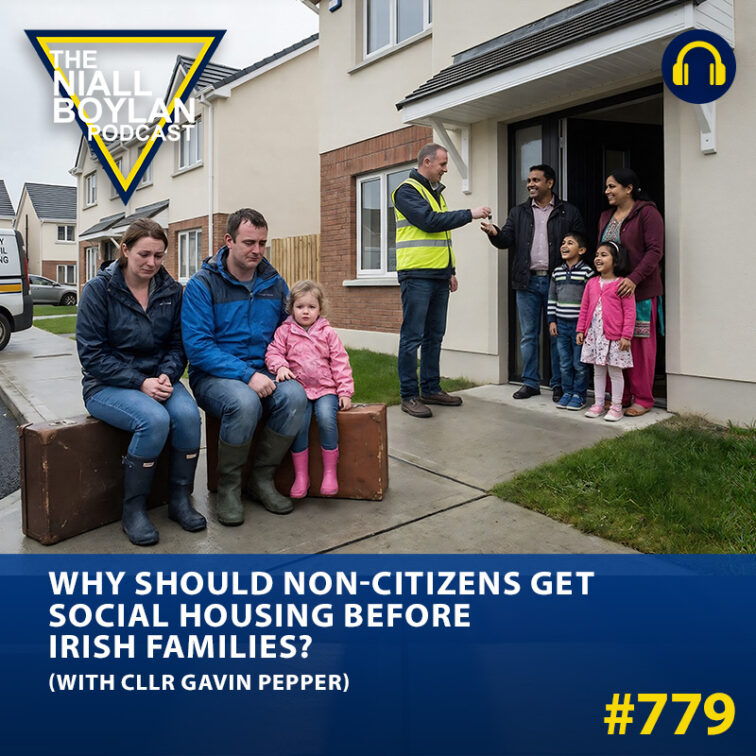
Why Should Non-Citizens Get Social Housing Before Irish Families? (With Cllr Gavin Pepper) Episode 779
-
play_circle_filled
Why Should Non-Citizens Get Social Housing Before Irish Families? (With Cllr Gavin Pepper) Episode 779
Niall Boylan
On this episode of The Niall Boylan Podcast, Niall speaks to Councillor Gavin Pepper about one of the most divisive issues in Irish politics today, who should get priority for social housing when there simply aren’t enough homes to go around.
The discussion follows comments by Nigel Farage, who has pledged that under a Reform UK government, foreign nationals would be barred from accessing social housing and would instead be expected to secure private accommodation or potentially face deportation. Supporters say citizens should come first when housing is in short supply, while critics argue that anyone who is legally living, working and paying taxes deserves equal treatment.
The debate has also reignited questions here in Ireland. While access to social housing is subject to strict eligibility rules, many people believe foreign nationals are being allocated homes ahead of Irish citizens who have spent years on waiting lists. Others insist this is a misconception and that housing is allocated based on need, family circumstances and legal entitlement rather than nationality.
Niall asks Gavin Pepper whether foreign nationals are genuinely jumping the queue for social housing and, if so, how that is happening. Are loopholes in the system being exploited? Is the public being misled about who gets housing and why? Or are politicians avoiding an honest conversation about the pressures immigration is placing on an already overwhelmed housing system?
The conversation also explores whether social housing should primarily be reserved for citizens and long-term taxpayers, or whether anyone who is legally resident in the country should have equal access to support. As housing shortages continue to worsen, who should come first when there simply aren’t enough homes for everyone?
Niall and Gavin debate the facts, the politics and the public anger surrounding one of the most controversial issues facing Ireland today.