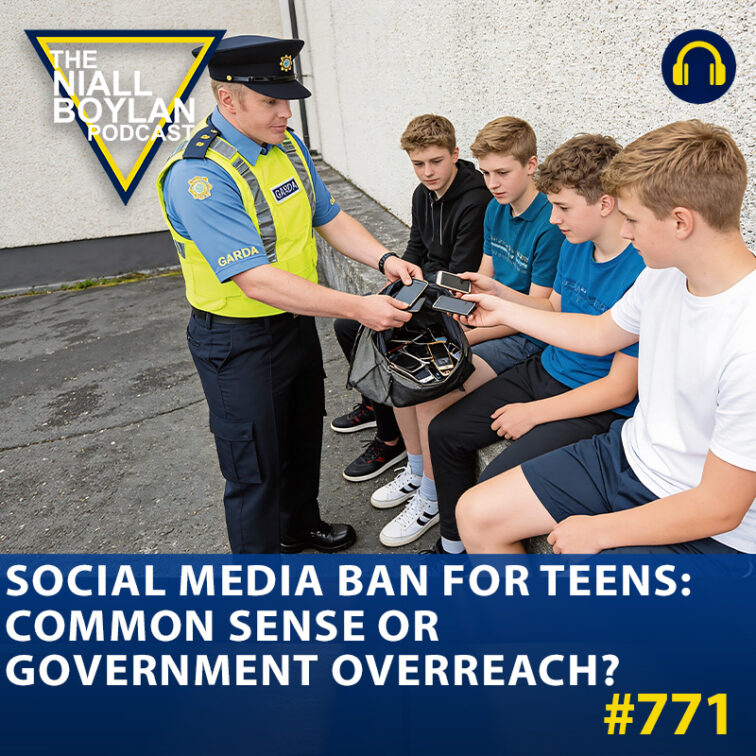
Social Media Ban For Teens: Common Sense Or Government Overreach? Episode 771
-
play_circle_filled
Social Media Ban For Teens: Common Sense Or Government Overreach? Episode 771
Niall Boylan
On this episode of The Niall Boylan Podcast, Niall is joined by social commentator Sandra Adams, Paul Treyvaud and secondary school teacher Eric Nelligan to discuss one of the most controversial proposals yet in the battle over children’s online safety.
UK Prime Minister Keir Starmer has announced sweeping new “Australia-plus” social media restrictions that would effectively ban under-16s from accessing major social media platforms including TikTok, Instagram, Snapchat, Facebook, YouTube and X. The plans would also introduce additional restrictions for older teenagers, including limits on late-night scrolling, possible social media curfews for 16 and 17-year-olds, and a ban on under-18s using romantic or sexual AI chatbots. To enforce the measures, age verification could require facial recognition technology, digital identity checks and official documents such as passports. Starmer described the proposals as “a real change for our children and our future” and said it was time to “call time on a system that’s failing our kids”, arguing that governments must stand with parents rather than leave families to battle powerful technology companies alone. According to the UK government, more than 90% of parents who responded to a recent consultation supported raising the minimum age for social media access to 16.
Supporters of the proposals say social media is damaging children’s mental health, exposing them to harmful content, fuelling addiction and making it easier for online predators to target young people. They argue that governments have a duty to intervene where technology companies have failed to protect children.
Critics, however, warn that the measures could become the foundation of a wider digital ID system, requiring adults and children alike to prove their identity before accessing online services. Others question whether the restrictions will work at all, pointing to evidence from Australia that many young people have already found ways around similar bans. Some teachers have also raised concerns that students increasingly rely on platforms such as YouTube for educational content, exam revision and independent learning.
So where should the balance lie? Should governments have the power to decide what teenagers can access online? Is age verification a reasonable safeguard or an invasion of privacy? Are these measures genuinely about protecting children, or are they the beginning of much greater control over the internet?
Niall, Paul and Eric debate the benefits, the risks and the unintended consequences of one of the most far-reaching attempts yet to regulate life online.